

 Facebook
 X
X
 Pinterest
 Copy Link
When colder weather rolls in, it doesn’t just mean cozy sweaters and hot coffee—it can also mean serious trouble for your home if you’re not prepared. Freezing temperatures can quietly cause damage to pipes, HVAC systems, roofs, and more, often leading to expensive repairs that could have been prevented with a little proactive care.
Here’s what cold weather can do to your home—and how to protect it before small issues turn into major headaches.
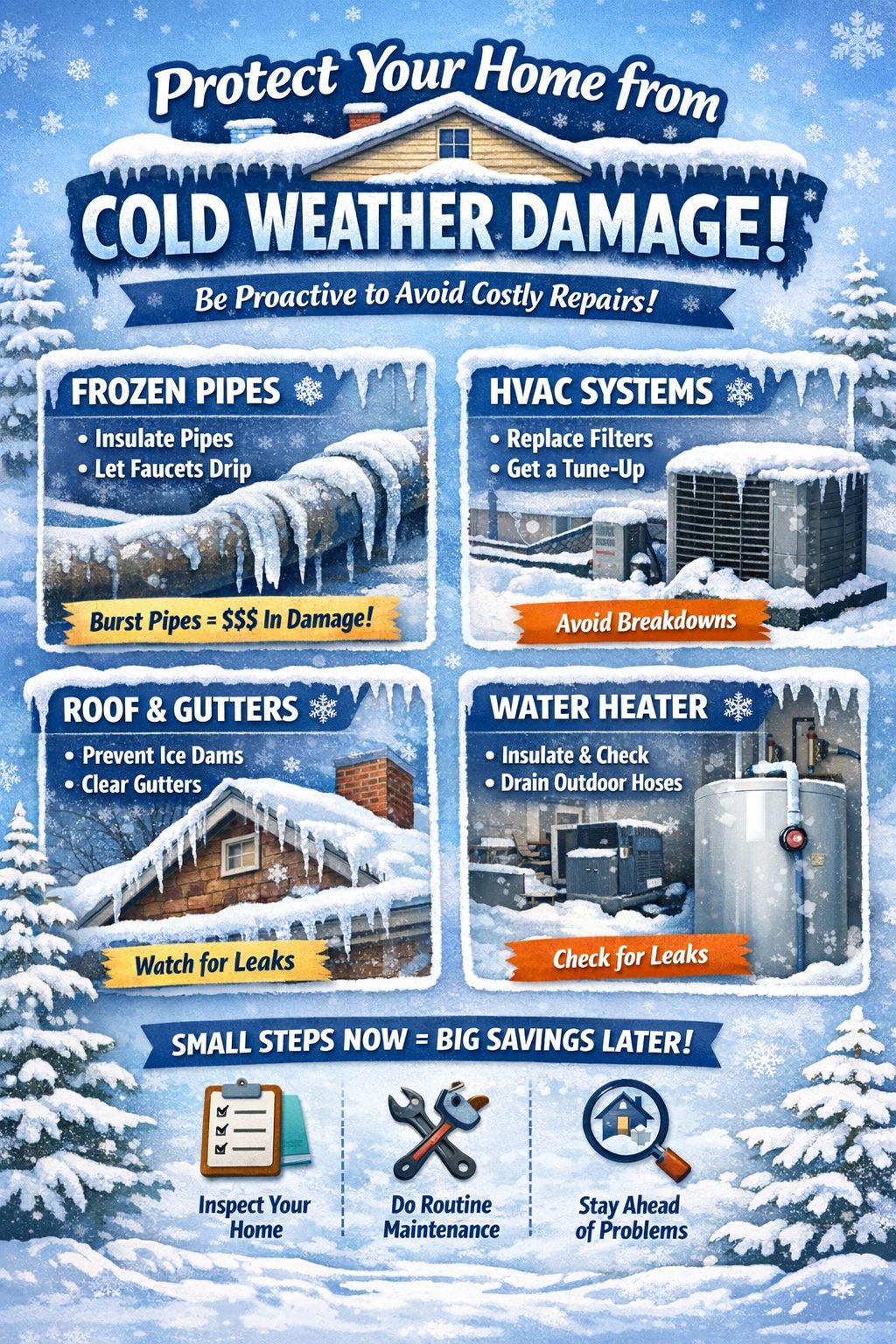
❄️ Frozen Pipes: The Biggest Winter Risk
One of the most common (and costly) winter problems is frozen pipes. When water freezes, it expands—and that pressure can cause pipes to crack or burst.
What to watch for:
-
Little to no water flow from faucets
-
Frost on exposed pipes
-
Unusual smells coming from drains
How to prevent it:
-
Insulate exposed pipes (especially in crawl spaces, garages, and exterior walls)
-
Let faucets drip slightly during extreme cold
-
Keep cabinet doors open to allow warm air to circulate
-
Never turn your heat completely off, even if you’re away
Why it matters: A burst pipe can cause thousands of dollars in water damage within minutes.
🔥 HVAC Systems: Don’t Let the Cold Overwork Them
Your HVAC system works overtime during cold snaps, and neglected systems are more likely to fail when you need them most.
Be proactive:
-
Replace air filters regularly
-
Schedule routine maintenance before winter hits
-
Make sure vents and returns aren’t blocked by furniture
-
Listen for unusual noises or uneven heating
Red flags: Cold spots, rising energy bills, or the system running constantly without warming the home.
🧊 Roofs, Gutters & Ice Dams
Ice dams form when snow melts on your roof and refreezes at the edges, preventing proper drainage. This can push water under shingles and into your home.
Preventative steps:
-
Keep gutters clear of leaves and debris
-
Ensure your attic is properly insulated and ventilated
-
Safely remove excess snow buildup if possible
Damage to look for: Water stains on ceilings, peeling paint, or dripping near exterior walls.
💧 Water Heaters & Appliances
Cold weather can stress water heaters and exposed appliance lines.
Protect them by:
-
Insulating the water heater and nearby pipes
-
Checking for leaks or corrosion
-
Making sure outdoor hose bibs are shut off and drained
A failing water heater in winter is more than inconvenient—it can quickly turn into a flooding issue.
🏡 Small Steps Now = Big Savings Later
Cold weather damage often happens quietly and escalates fast. A few preventative checks can save you from emergency repairs, insurance claims, and major disruptions.
If you’re a homeowner, now is the time to:
✔️ Walk through your home
✔️ Address small issues early
✔️ Schedule routine maintenance
And if you’re thinking about buying or selling a home, understanding how a property handles seasonal changes is incredibly important.
Staying proactive doesn’t just protect your house—it protects your investment.
